
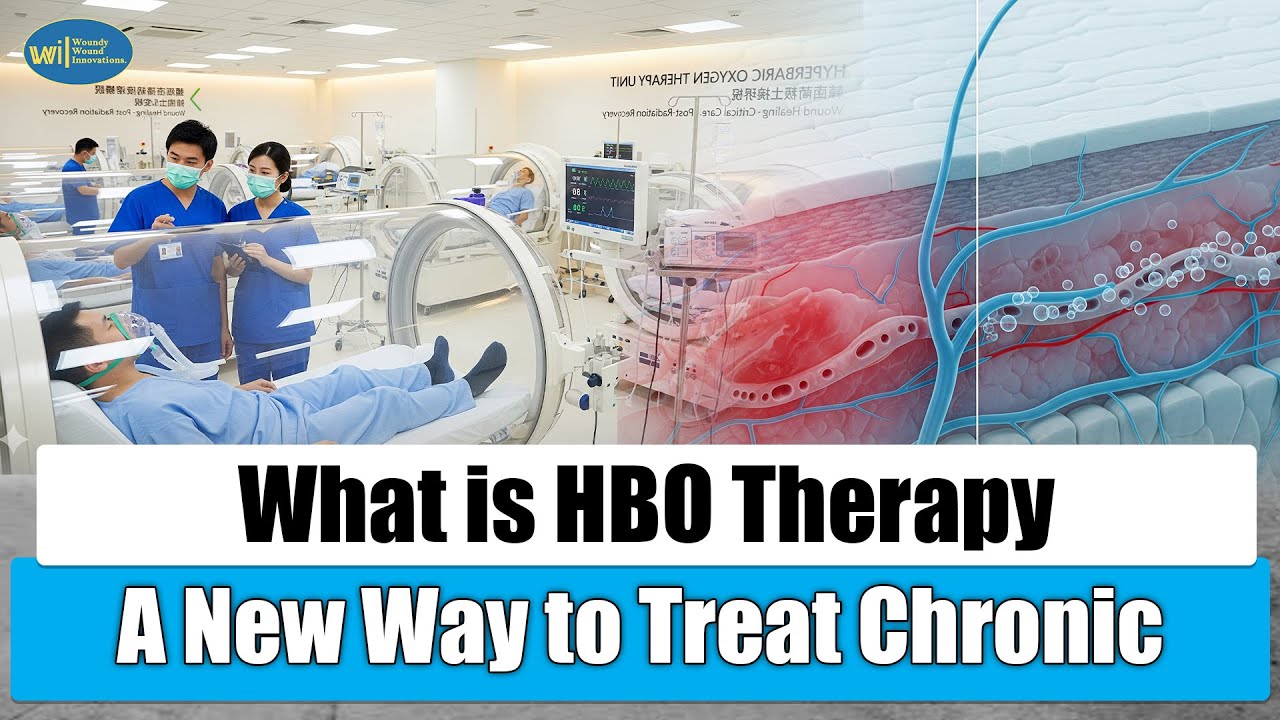
HBO Therapy: What Is Hyperbaric Oxygen Therapy and How Can It Support Wound Healing?
Hyperbaric Oxygen Therapy, commonly known as HBO Therapy or HBOT, is an advanced medical treatment used to support healing in selected wound-care patients. It is especially discussed in wound care because oxygen plays an important role in tissue repair, infection control, and recovery.
In HBO Therapy, a patient breathes pure oxygen inside a specially designed pressurized chamber. This increased pressure helps the blood carry more oxygen to body tissues, including areas where normal oxygen supply may be reduced.
What Is HBO Therapy?
HBO Therapy is a treatment where the patient stays inside a hyperbaric oxygen chamber while breathing oxygen under higher-than-normal air pressure. According to MedlinePlus, the pressure inside the chamber may be about two and a half times greater than normal atmospheric pressure, helping the blood deliver more oxygen to organs and tissues.
For wound-care patients, this extra oxygen may help damaged tissues recover better. Cleveland Clinic explains that HBOT can help the body grow new skin, blood vessels, and connective tissue, which are important parts of the healing process.
How Does HBO Therapy Help Wounds?
A wound needs oxygen to heal. When oxygen supply is poor, healing can become slow, especially in people with diabetes, poor blood circulation, chronic wounds, infections, or tissue damage.
HBO Therapy may support wound healing by:
improving oxygen delivery to damaged tissues, supporting new blood vessel formation, helping the body fight certain infections, reducing tissue stress, and supporting the healing of selected difficult wounds.
MedlinePlus notes that hyperbaric therapy can help some wounds, especially infected wounds, heal more quickly.
When Is HBO Therapy Used in Wound Care?
HBO Therapy is not needed for every wound. It is usually recommended only after a proper medical assessment. In wound-care practice, it may be considered for selected chronic wounds, diabetic foot wounds, infected wounds, wounds with poor oxygen supply, and certain tissue injuries.
Cleveland Clinic states that HBOT is used along with standard wound care, and it may be recommended when wounds do not show measurable healing after a period of standard care.
This means HBO Therapy should be seen as a supportive treatment—not a replacement for wound cleaning, proper dressing, infection control, pressure relief, diabetes control, or regular medical follow-up.
What Happens During HBO Therapy?
During a session, the patient enters a hyperbaric oxygen chamber. Depending on the chamber type, the patient may lie down or sit comfortably while the treatment is given. The chamber is pressurized, and the patient breathes oxygen during the session.
Some patients may feel pressure in the ears, similar to what happens during air travel. Cleveland Clinic notes that patients may relax, nap, or watch something during treatment, and the main physical sensation may be mild pressure in the ears.
The number of sessions depends on the wound condition and the doctor’s treatment plan.
Is HBO Therapy Safe?
HBO Therapy is generally performed under medical supervision, but like any medical treatment, it may have side effects or risks. Possible side effects can include ear pressure, sinus pressure, claustrophobia, temporary vision changes, or rarely more serious complications. Cleveland Clinic lists possible side effects such as ear injuries, claustrophobia, and sinus congestion or pressure.
Because oxygen-rich environments require safety precautions, patients should follow all instructions given by the medical team before and during treatment.
Why Medical Assessment Is Important
Not every wound patient is suitable for HBO Therapy. A wound-care specialist must first assess the wound type, infection status, circulation, diabetes control, tissue condition, and overall health of the patient.
This professional evaluation helps decide whether HBO Therapy is appropriate and how it should be combined with other wound-care treatments.
