
Maggot Therapy: How Does Maggot Therapy Work?
Maggot Therapy, also known as Maggot Debridement Therapy (MDT) or Larval Therapy, is a controlled medical wound-care treatment that uses sterile medical larvae to help clean selected wounds. Although the idea may sound unusual, Maggot Therapy has a clear scientific purpose in modern wound care.
This treatment is mainly used to remove dead or unhealthy tissue from wounds that are slow to heal. When dead tissue remains in a wound, it can delay healing and increase the risk of infection. Maggot Therapy helps prepare the wound bed so the body can continue the healing process more effectively.
What Happens During Maggot Therapy?
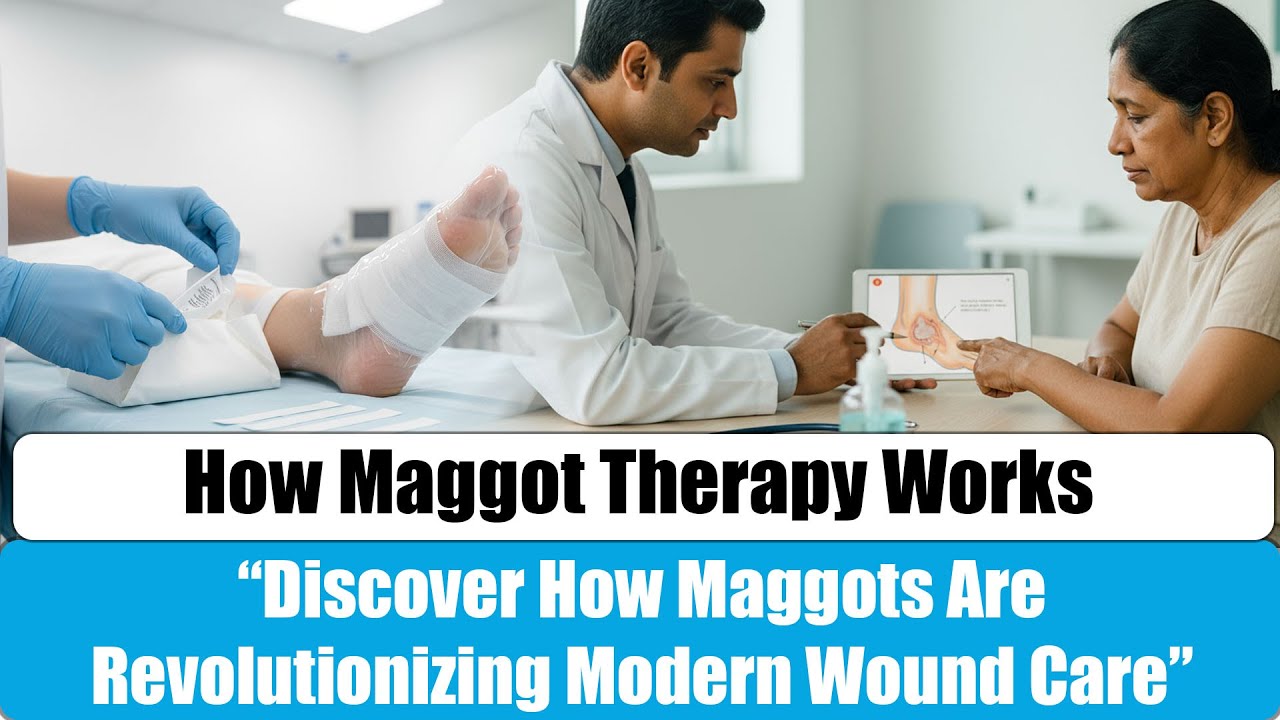
During Maggot Therapy, specially prepared sterile larvae are placed on the wound by a trained medical professional. These larvae are not ordinary maggots from the environment. They are medical-grade larvae prepared under controlled conditions for wound treatment.
The larvae are usually kept in place using a special dressing. In some cases, they may be applied directly to the wound under a protective dressing, while in other cases they may be placed inside a special sealed bag or mesh dressing. This keeps the treatment controlled, safe, and comfortable for the patient.
The dressing is left in place for a limited time, depending on the wound condition and the treatment plan. After the treatment period, the medical team removes the dressing and larvae, then reassesses the wound.
How Do the Larvae Clean the Wound?
Maggot Therapy works through a process called debridement. Debridement means removing dead, damaged, or infected tissue from a wound.
The larvae release special enzymes into the wound. These enzymes help break down dead tissue into a softer form that the larvae can remove. Chelsea and Westminster Hospital explains that the larvae feed on dead tissue and release chemicals that break it down into a liquid form, which the larvae can then digest.
This action helps clean the wound while protecting healthy tissue. NSW Health Pathology notes that medical maggots mainly remove dead and infected tissue while leaving surrounding healthy tissue intact.
Why Do They Not Damage Healthy Tissue?
One of the important benefits of Maggot Therapy is that the larvae are selective. They are attracted to dead or unhealthy tissue, not healthy living tissue.
This makes the treatment useful for wounds where dead tissue is difficult to remove by standard dressing methods. However, it must still be done under professional supervision, because not every wound is suitable for this therapy.
How Can Maggot Therapy Help Infection Control?
Maggot Therapy may also support wound cleaning by reducing bacteria in the wound environment. During the cleaning process, larvae may take up bacteria, and some bacteria can be destroyed inside the larvae’s gut. Chelsea and Westminster Hospital describes this as part of the process by which larvae help clean the wound.
Medical research also describes maggot therapy as having multiple actions, including wound cleaning, disinfection, and support for healing.
What Types of Wounds May Need Maggot Therapy?
Maggot Therapy is not used for every wound. It is usually considered for selected wounds that contain dead tissue or are not healing properly.
It may be considered for:
- Chronic wounds
- Diabetic foot wounds
- Pressure ulcers
- Venous leg ulcers
- Infected wounds
- Non-healing traumatic wounds
- Some post-surgical wounds
The FDA-listed indications for medical maggots include debriding non-healing necrotic skin and soft tissue wounds, including pressure ulcers, venous stasis ulcers, neuropathic foot ulcers, and non-healing traumatic or post-surgical wounds.
Is Maggot Therapy Painful?
Patient experience can vary. Some patients may feel a tickling, mild crawling sensation, or some discomfort, while others may feel very little. Pain depends on the wound condition, location, sensitivity, and overall patient health.
If a patient feels discomfort, the wound-care team can assess the situation and provide appropriate support. The treatment should always be supervised by trained professionals.
Why Medical Supervision Is Essential
Maggot Therapy should never be attempted at home using ordinary larvae. Only sterile medical-grade larvae are suitable for this treatment. The wrong type of larvae or non-sterile larvae can cause serious infection and harm.
NHS guidance explains that maggots used for larval therapy are specially bred in a laboratory and placed on the wound under a dressing to keep them contained.
A wound-care specialist must first assess the wound and decide whether Maggot Therapy is safe and suitable. The treatment must be combined with proper wound dressing, infection control, diabetes management when needed, pressure relief, and regular follow-up.
Maggot Therapy as Part of Advanced Wound Care
Maggot Therapy is not a miracle cure, and it is not the correct treatment for every patient. It is one advanced wound-care option that may help clean selected wounds and support healing.
The best results usually come when Maggot Therapy is included in a complete wound-care plan. This may include wound assessment, dressing selection, infection control, circulation assessment, nutrition support, and patient education.
